

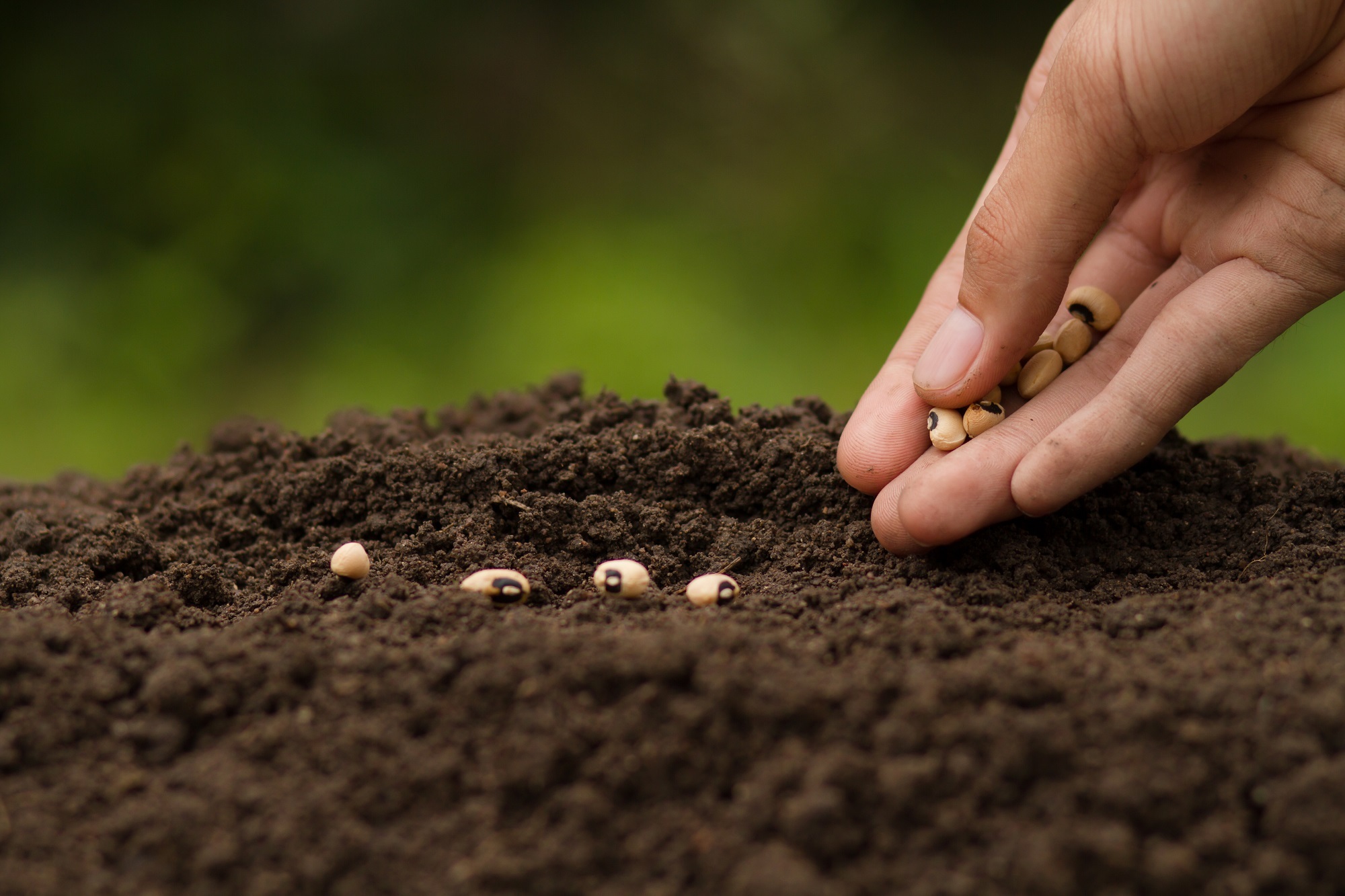
We provide a variety of top-grade seeds, carefully selected to meet the needs of farmers, helping them achieve higher crop yields and superior quality.
The availability of seeds is one of the problems of the Egyptian farmer, and it is also one of the tributaries of the process of developing the Egyptian countryside, which the President of the State has recently begun to pay attention to as a new national project, for which about 200 billion pounds have been allocated
Seeds are not meant here merely as ordinary seeds, but rather as seeds adapted to the Egyptian environment, which are intended to be productive first. Secondly, it is tolerant to soil moisture and salinity. Thirdly, it is adapted to the climate and weather. Fourthly, it saves irrigation water consumption, and fifthly, its product or outlet has a good taste and is of large size.
Last but not least, the length of time the seeds remain in the soil for the purpose of production is short. For all of this, the cost of the farmer purchasing seeds and seeds, especially for vegetables and fruits, was very large, and hence there is an urgent need to provide them at reasonable prices, which encourages the farmer to cultivate and produce crops, and thus provide a significant amount of food in the country.
According to data from the Central Agency for Public Mobilization and Statistics, Egypt imports more than 90% of its fruit and vegetable seeds, valued at about 7 billion pounds annually.
This is certainly a very large number, given that Egypt is originally an agricultural country. The problem also appears by seeing the development that has emerged in the process of seed production in other relatively newly established countries, such as the United States, Denmark, and Switzerland. Indeed, the Zionist entity is known to be one of the countries that produces high-quality seeds.
In Egypt, there are many research centers for seed and seed production, and according to the Arab Organization for Agricultural Development, there are 65 seed and seed production stations in Egypt, producing 364 tons/hour, of which 34 stations are owned by the private sector, and 31 are owned by the public sector, and the latter belongs to the agricultural research centers and the Central Administration for Seed Production. .
It is worth noting that some seed and seed production factories were sold at low prices as part of privatization projects during the Mubarak era, including the Noubaria Company, which was established in 1976, and which produced 60% of seed and seed production before it was sold to an Arab investor in 1998.
With the exception of cotton seed, the state does not support the production of seeds and seeds for the farmer. Rather, the corn that the farmer sells in the Irbid (in the field) for a price not exceeding 5 pounds per kilogram, the farmer himself buys his seeds at a price of up to 65 pounds per kilogram, simply because it is a seed for multiplication.
One of the most prominent projects for the development of the Egyptian countryside is the return of Egypt’s position as a major source of seed and seed production, taking into account work to develop the product according to the rules of genetic engineering, which increases production and reaches the farmer at reasonable prices instead of relying on imports, which makes seed prices rise. Tens of times more than the product produced locally.
It is worth noting that Egypt imports 190 types of tomato seeds and 120 types of cucumber seeds.
In this regard, the hope remains to support the operation of the national program for seed and seed production, in partnership with research institutes and the National Company for Protected Agriculture.
There is also hope that the Agricultural Research Center will produce good varieties of corn and wheat seeds.
It is worth noting that Egypt was recently able to become self-sufficient with a large surplus for export to Arab markets in terms of alfalfa and strawberry seeds. Egypt has also been self-sufficient in wheat seeds for a short time. It produces it at a price not exceeding 9 pounds per kilo, which contributed to not burdening the farmer by purchasing high-priced imported seeds, which no longer exists due to the closure of the door to importing them after they are available locally, and of high quality, after they are free of yellow rust.
Providing seeds at the Ministry of Agriculture, as has been the case for several decades, is an important matter in confronting the high prices of seeds. In other words, supporting the role of the branches of the Agricultural Bank of Egypt throughout Egypt (formerly the Agricultural Development and Credit Bank) represents great importance in confronting the high prices resulting from selling these products in the private sector alone.
By these means and many other ways, the farmer can overcome an insurmountable obstacle related to seeds and seeds, which is one of the state’s most important problems in developing the Egyptian countryside.