

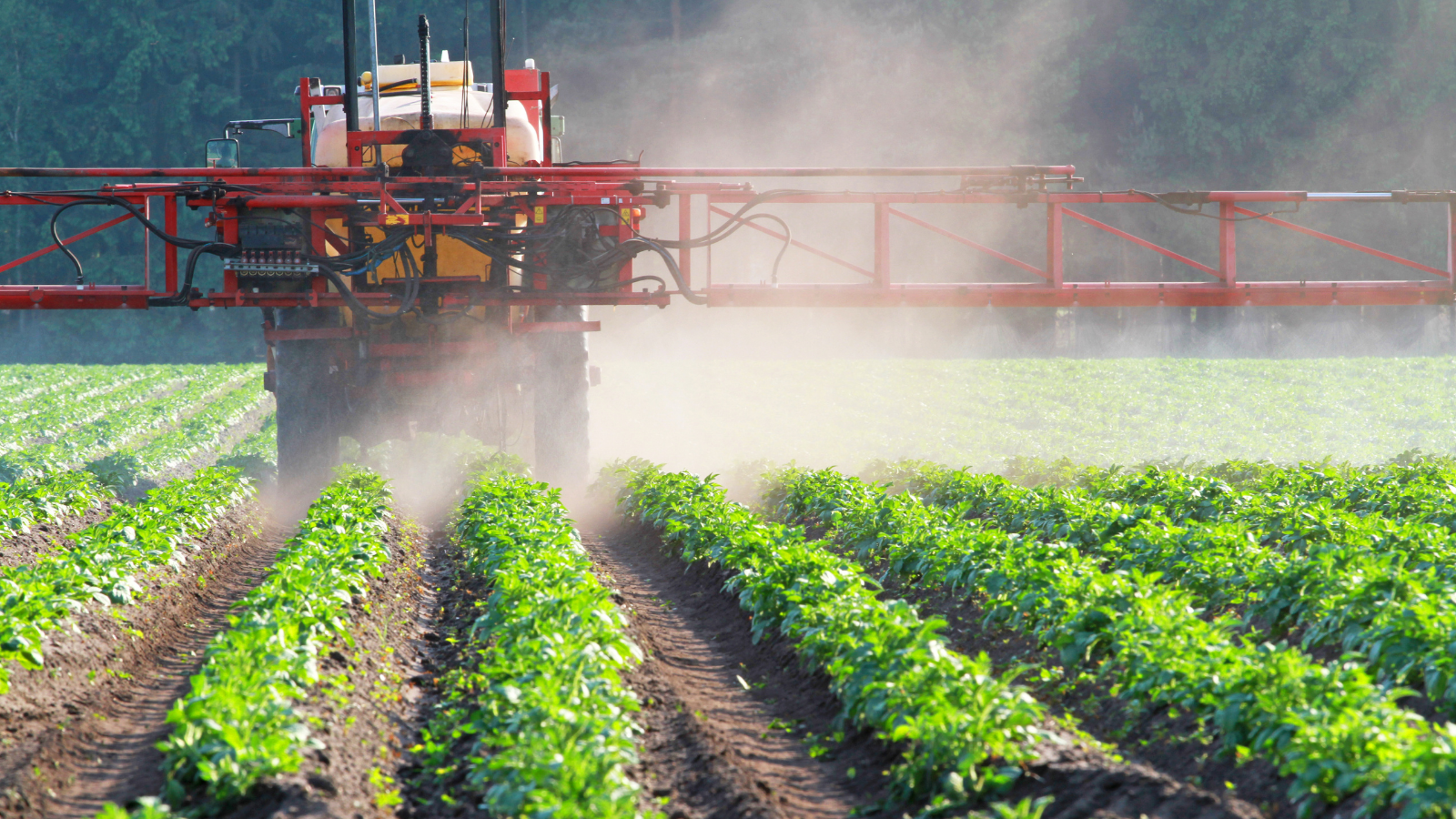
Our range of pesticides is designed to protect crops from pests and diseases, enabling farmers to secure their yields and reduce post-harvest losses.
Do insects affect crop levels? Insecticides are defined according to the Environmental Protection Agency as any substance or mixture of substances designed to eliminate or mitigate a type or types of insects and pests. These substances are important for farmers and other groups. [1] Various insects and pests destroy approximately 37% of the agricultural crop. For North America, the affected people and others resorted to using pesticides to reduce the amount of losses
Among the most prominent benefits that result from the use of pesticides, some of which will be detailed later, are the following
Prevent damage to crops, especially stored ones
Preventing some diseases by eliminating disease vectors
Pesticides offer many important benefits. However, increasing their use does not mean increasing the desired benefits, as some experts advise reducing the percentage of pesticides by approximately half, as this amount will not reduce the level of crop productivity. Below is a breakdown of some of its benefits: Improving Productivity
Do pesticides contribute to increasing production rates? Farmers aspire to improve and increase the production of their farms, which will greatly benefit them in all aspects, and using pesticides correctly is one of the most prominent ways to achieve the goal, as it was as follows:
Farmers are able to produce more crops on less land.
Increase crop production by 20-50% of usual output.
Maximize the benefits of other agricultural implements; Such as high-quality seeds, fertilizers and water resources.
The use of pesticides contributes to raising crop production rates, as they are an indispensable tool for sustainable production.
What is the percentage of crop loss due to weeds without spraying pesticides? A review was published in 2009 by agricultural specialists in Bengal, India, which investigated the impact of the use of pesticides in agriculture in terms of their benefits and risks, and was as follows:
The review included all studies relevant to its main topic.
After analyzing the data, the following was observed:
Pesticides contribute to protecting against crop loss, as they contribute to preventing weed growth at a rate of 28-48, thus preserving rice.
Reduced crop loss by 40%.
“Pesticides contribute to reducing crop losses, specifically those caused by weeds,” the review concluded. Disease vector control What is the most effective type of insecticide against disease vectors? The primary goal of using pesticides was to get rid of disease vectors, when the scientist Manson linked filaria, or what is known as elephantiasis, to mosquitoes and other diseases. One of the most prominent pesticides used to eliminate disease vectors is the pesticide trichloroethane, or more simply DDT, which was used. On a global scale to combat typhus, malaria, etc., and as it was used by the World Health Organization, this pesticide has become banned in many countries due to its impact on the environment. Despite this, it is used in some countries, especially those where disease-carrying insects are widespread, and it is one of the most prominent types of pesticides. Which may be used to resist the following disease vectors
Malathion and fenitrothion, known as organophosphates. propoxur and bendiocarb, known as carbamates.
Permethrin and deltamethrin are known synthetic pyrethroids.
The use of insecticides as a means of combating disease vectors is due to the foot, and there are many types used for this purpose, the effectiveness of which varies depending on the type. Protection from insects: Can some insecticides be used directly on the skin? Flies, bugs, mosquitoes, ticks, and fleas are among the most prominent and widespread insects around the world, which are a source of nuisance due to their bites. Getting rid of them has always been one of the most prominent reasons for using insecticides. It is worth noting that some people are more attracted to insects than others, depending on many factors. factors,